

Number of ADUs Allowed in San Gabriel
- Size: Local detached limits are 850 sq ft for a studio/one-bedroom and 1,000 sq ft for a two-bedroom unit. Attached size, state minimum-size protections, and qualifying conversions depend on the approval pathway.
- Side/rear setbacks: Generally 4 feet for new construction; qualifying conversions and replacements have exceptions.
- Two stories: Possible for some ADUs. Attached and detached units have different height limits and conditions; confirm what applies to your property.
- Building separation: Local constructed-ADU standards specify 6 feet between walls and 4 feet between projecting features; state-exempt pathways require separate review.
- Soils report: May be required; check liquefaction-zone and foundation-work conditions.
- Site survey: Generally required when property boundaries are not clearly established and verifiable.
- Coastal permit (in some areas): N/A
- Stormwater: Applicable runoff controls required; confirm project-specific drainage and mitigation requirements.
Sources: City ADU standards, state ADU law, and Building & Safety guidance. Confirm which requirements apply to your project.
Number of ADUs Allowed in San Gabriel
A qualifying single-family lot can combine one ADU within qualifying dwelling or existing accessory-structure space, one JADU within the single-family residence, and one new detached ADU of up to 800 square feet under the state-exempt pathway. That can mean two ADUs plus one JADU, not just one ADU plus one JADU. Each unit must meet the requirements for its approval pathway.
For an existing multifamily property, qualifying nonliving space within the multifamily building may be converted into ADUs: at least one and up to 25% of the existing units. State law also allows up to eight detached ADUs, capped by the number of existing units on the lot. For a proposed multifamily dwelling, the detached allowance is up to two. Conversion and detached ADUs can be combined when their respective requirements are met.
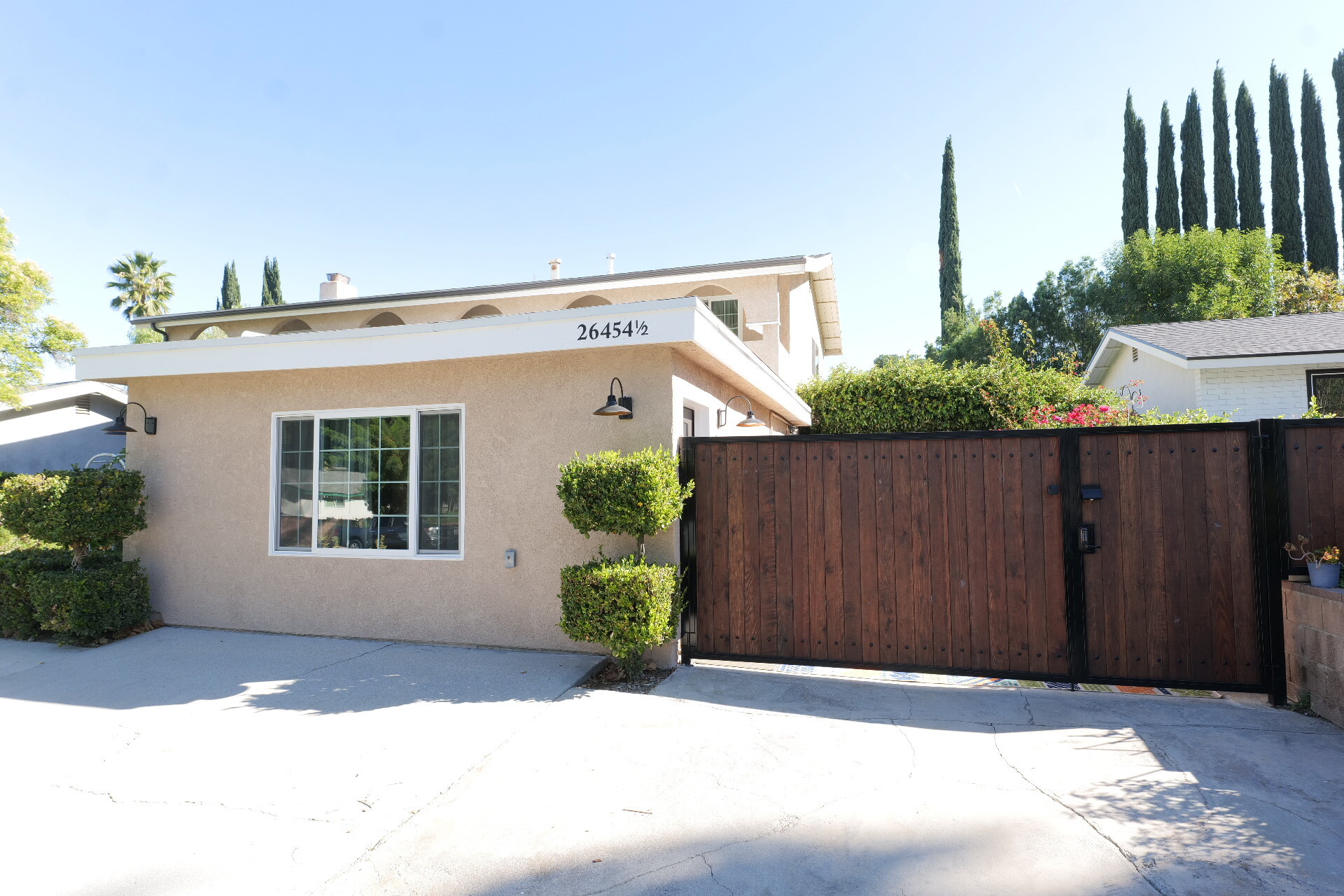
ADU San Gabriel – Size & Building Constraints
San Gabriel's local size limits for detached ADUs are 850 square feet for a studio or one-bedroom unit and 1,000 square feet for a two-bedroom unit—not a blanket 1,200 square feet. The separate state-exempt new detached ADU pathway on a single-family lot is limited locally to 800 square feet. Qualifying existing-space conversions follow different rules; confirm the pathway before setting the unit size.
San Gabriel's published rule for an ADU attached to an existing primary dwelling is the smaller of 50% of the main dwelling's size or the applicable 850-square-foot studio/one-bedroom or 1,000-square-foot two-bedroom limit. State law also protects minimum permitted size allowances and an 800-square-foot option from specified size and site restrictions, so the 50% formula is not an absolute cap in every case. Qualifying internal conversions follow a separate pathway; confirm which rules apply to your design.
Detached ADUs generally start with a 16-foot height limit, but qualifying sites can have higher allowances. San Gabriel's code allows 18 feet on qualifying transit-adjacent lots or lots with an existing or proposed multifamily, multistory dwelling. Qualifying transit-adjacent ADUs can receive another two feet for a roof pitch aligned with the primary dwelling. For an ADU attached to the primary dwelling, the City's code allows up to 25 feet and no more than two stories. Confirm the standards and approval pathway that apply to your property before finalizing the design.
Sources: San Gabriel Municipal Code §153.047 and California Government Code §66321.
A two-story ADU may be possible, but attached and detached units follow different rules. San Gabriel's code allows an ADU attached to the primary dwelling up to 25 feet and no more than two stories. Its constructed-ADU standards allow a two-story detached unit only when an 800-square-foot ADU cannot be achieved as one story, subject to height and setback requirements. The applicable approval pathway and site conditions still need to be checked.
Do not assume that a general height allowance authorizes two separate stacked ADUs. San Gabriel's code includes separate restrictions for two-story detached ADUs and units built above existing residences or non-habitable accessory structures. Check the proposed layout and applicable approval pathway with the City before planning stacked units.
Do not assume two ADUs may share a wall simply because the lot qualifies for multiple units. State law’s multifamily pathway requires the ADUs to be detached from the main multifamily building; that alone does not confirm whether the ADUs may share a wall with one another. San Gabriel’s separate constructed-ADU standards include building-separation rules. Have the City confirm the approval pathway and shared-wall layout before design.
A JADU must be contained within the proposed or existing single-family residence; it is not a separate addition to a detached ADU. State law includes enclosed attached garages as part of the residence for this purpose. An ADU and a JADU can coexist on a qualifying single-family lot, but the exact layout must satisfy each unit's requirements.
Do not assume an ADU roof deck is allowed. Ask San Gabriel Planning and Building & Safety to review the deck, guards, stairs, height measurement, and setbacks with the ADU plans before including it in the design.
For ADUs subject to the City’s local design standards, the exterior must match the main home’s building forms, materials, colors, finishes, roof forms, and window and door styles. Qualifying ADUs under Government Code section 66323 are not subject to these additional design standards.

ADU Setbacks in San Gabriel
Newly constructed ADUs generally use four-foot side and rear setbacks under San Gabriel's code; this is not limited to units behind the main home. Qualifying existing-space conversions and same-location, same-dimension replacements have setback exceptions. The state-exempt internal/conversion pathway requires side and rear setbacks sufficient for fire and safety. Check the approval pathway and any added floor area before applying a setback rule.
San Gabriel's constructed-ADU standards call for six feet between the closest building or structure walls, plus at least four feet between projecting features such as eaves or chimneys. That is not a universal rule for every ADU: qualifying state-exempt units follow a separate approval pathway, and attached ADUs do not have a detached-building gap. Confirm the applicable building and fire-safety requirements for your layout.
A front-yard ADU may be possible, but placement depends on the approval pathway and site. San Gabriel generally applies the zone's front setback to constructed detached ADUs, with an exception when that setback would prevent an 800-square-foot ADU. State law also protects an 800-square-foot option from front-setback restrictions that would prevent it. This is not a universal 800-square-foot maximum for every front-yard ADU; confirm the proposed location and other applicable standards.
ADU Setbacks in San Gabriel
First-time building plan submissions must be brought in person. Revised plans can be submitted by email to commdevinfo@sgch.org.
A soils report may be required. The City’s residential submittal checklist says one is typically required for two-unit developments in a liquefaction zone or any new foundation work in a liquefaction zone. Ask Building & Safety whether your site and foundation design require a report.
For constructed ADUs subject to local design standards, San Gabriel’s code calls for screening with trees, massed shrubs, and ground plantings. Qualifying section 66323 ADUs are not subject to additional local development or design standards. Check the applicable approval pathway and landscaping standards before planning the yard.
Submit the required application and plans, complete plan review and any corrections, obtain permits, and complete required inspections. The City’s checklist requires Planning review before Building Division submittal. State law generally requires a completeness determination within 15 business days and approval or denial within 60 days after a completed application is received when a dwelling already exists on the lot. Review with a new primary dwelling can be delayed until that dwelling is approved or denied, and applicant-requested delays pause the 60-day period. These are statutory review deadlines, not a guaranteed construction schedule.
Parking for San Gabriel ADU
San Gabriel’s general rule is one parking space per ADU or bedroom, whichever is less, but no ADU parking may be required when a state exemption applies. These include being within a half-mile walk of public transit; being within an architecturally and historically significant historic district; being part of a proposed or existing primary residence or accessory structure; on-street parking permits being required but unavailable to ADU occupants; or a car-share vehicle within one block. The concurrent-new-dwelling exemption requires another listed criterion. Qualifying Government Code section 66323 ADUs are also protected from additional local parking standards. Parking removed or converted in conjunction with the ADU need not be replaced.
Where ADU parking is required, state law allows tandem parking on a driveway and off-street parking in setback areas at locations determined by the City. Specific topographic or fire and life-safety findings can limit these options, so do not assume every setback area is suitable.

Additional Requirements in San Gabriel
Under the 2025 Energy Code, newly constructed detached ADUs generally require new solar photovoltaic capacity unless an applicable exception applies. Attached ADUs and conversions treated as additions or alterations do not trigger the new-building solar requirement. Have the energy compliance designer document the applicable requirements and exceptions.
Separate meters are not a universal yes-or-no requirement. San Gabriel’s code allows separate metering, but state utility-connection protections depend on the ADU category. For qualifying section 66323(a)(1) units, a new or separate utility connection generally cannot be required, with exceptions including construction with a new single-family home or separate conveyance. Other ADUs may be required to have a separate connection. Confirm water service, electric metering, and capacity requirements with the serving utilities before finalizing plans.
San Gabriel’s Public Works Department determines address assignments for new ADUs and JADUs. Confirm the assigned address during permitting rather than assuming the ADU will use the main home’s address.
Low Impact Development (LID) is a stormwater-management approach intended to reduce runoff and protect water quality. San Gabriel requires new development to comply with its stormwater permit, with additional mitigation depending on the project. Ask Public Works which drainage plans, runoff-control measures, and review fees apply to your ADU; do not assume an ADU-size-based LID fee.
No short-term rentals: San Gabriel’s ADU code requires rental terms longer than 30 days. An Airbnb listing is not itself the test; the rental term must comply with the City’s rules and the ADU’s recorded restrictions.
Do not assume an ADU is permanently exempt from rent limits because it was built after 1995. California’s statewide rent-cap law generally exempts housing issued a certificate of occupancy within the previous 15 years; that exemption is rolling, not permanent. Whether a particular ADU is covered depends on its occupancy date and other applicable exemptions and restrictions. Review the rental’s status before setting rent increases.
Gas appliances are not automatically approved just because they meet installation safety rules. The 2025 Energy Code addresses gas appliances in newly constructed detached ADUs and requires electric-ready provisions for specified gas equipment. Have your designer and Building & Safety confirm that the proposed appliance package meets the applicable energy-compliance pathway and current local requirements.
State law says fire sprinklers cannot be required in an ADU if they are not required for the primary residence, and building an ADU does not by itself trigger sprinklers in the existing primary home. San Gabriel’s code calls for ADU sprinklers when they exist or are required in the primary unit. Confirm how these provisions apply to the proposed home and ADU with Building & Safety.
Have Additional Questions?
Visit our comprehensive FAQ page for more information.