

Number of ADUs Allowed in San Marino
- Maximum size: 1,200 sq ft (detached or attached, or 50% of the size of the main dwelling)
- Side/rear setbacks: 4 feet
- Two story: Yes, for both attached and detached ADUs
- Building separation: 6 feet
- Soils Report: Possibly, especially in areas with grading or on hillsides
- Building Verification Survey: Yes
- Coastal permit (in some areas): N/A
- Stormwater Mitigation: Yes
Number of ADUs Allowed in San Marino
You are allowed to put one attached or detached ADU on single-family property in San Marino, as well as one JADU.
Multifamily property owners in San Marino may convert existing uninhabitable space into at least one attached ADU, and additional ADUs not to exceed a maximum number equal to 25% of the existing units. Ergo:
- From 2 to 7 units, you could convert existing uninhabitable space into one ADU
- From 8 to 11 units up to 2 ADUs
- From 12 to 15 units up to 3 ADUs
- And so on.
No more than two detached ADUs may be constructed on a multifamily lot in San Marino.

ADU San Marino – Size & Building Constraints
A detached ADU can be up to 1,200 square feet in San Marino.
An attached ADU in San Marino can be up to 1,200 square feet, or 50% of the square footage of the primary dwelling unit, whichever is smaller.
A detached ADU can be up to 20 feet tall in San Marino. An attached ADU can be up to 25 feet high or the height of the primary dwelling unit, whichever is smaller.
2-story ADUs may be permitted in San Marino if height restrictions are adhered to. Height limits of both attached and detached ADUs generally accommodate two-story floor plans, especially if the attached ADU is attached to a two-story primary dwelling unit.
No specific restrictions prevent stacked ADUs (one ADU on each story of a two-story building) in San Marino as long as height restrictions are adhered to. However, single-family property is limited to one detached ADU, so only multifamily property would be eligible.
Yes, you can build two ADUs attached to each other on one separate detached structure in San Marino. Keep in mind that only multifamily property is eligible, since multifamily property can have up to two detached ADUs and single-family property is limited to one detached ADU.
No, a JADU is defined as an ADU converted from existing space within the main structure of the primary dwelling unit. As such, it cannot be attached to an ADU.
Generally roof decks would be permitted on an ADU, but must meet the height restrictions for the zone. Roof decks cannot encroach into the required setbacks. As a rule of thumb, railings and access staircases above 42″ need to be included in height calculations.
An ADU must match or harmonize with the exterior of the main dwelling unit, including color palette, roof pitch, architectural style, and other aesthetic characteristics.
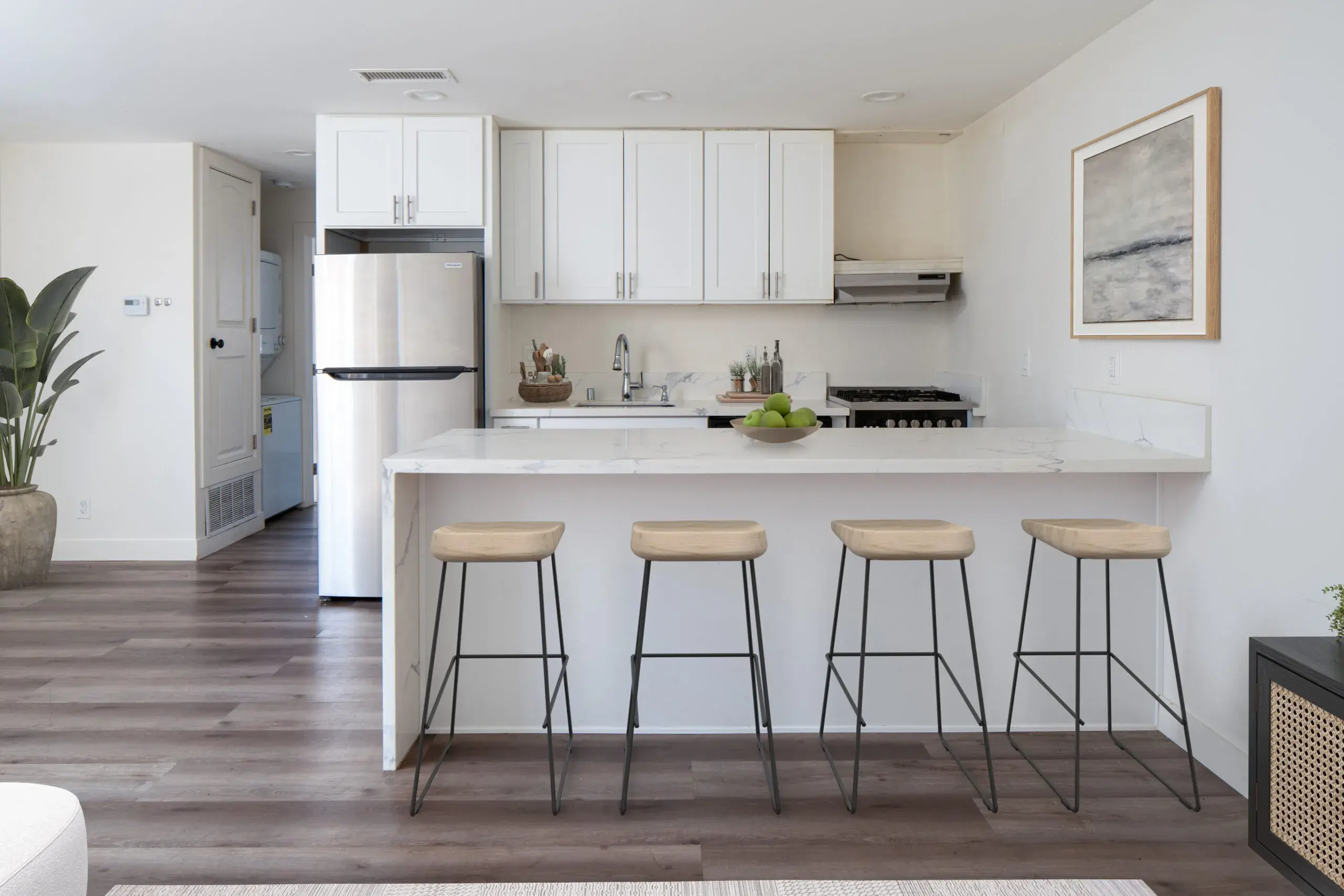
ADU Setbacks in San Marino
Setback requirements vary for ADUs in San Marino. 4-foot rear and side setback requirements are common throughout California, so that remains the safest assumption, but we will need to check the requirements based on the zoning of your specific property during the planning stage.
No specific building separation requirements are specified in San Marino. 6-foot building separation is common throughout California due to fire codes and other regulations, but we will need to check the requirements based on the zoning of your specific property during the planning stage.
An ADU may be permitted in the front yard of property in San Marino if the lot has frontage width of at least 100 feet.
ADU Setbacks in San Marino
You can submit plan applications online to the Building & Safety Division using the San Marino Community Development Department’s Community Core portal,accessible here.
San Marino may require a soils report for ADU permitting to make sure the soil can support the new structure, especially if the ADU will be located on a hillside, an area with significant grading, or if there are special foundation requirements.
Sufficient green space and permeable surface must be maintained on the property. City regulations do not specify specific percentages and must be approved on a case-by-case basis in the planning stage. Local ordinances for tree preservation must also be adhered to.
The plan check process for an ADU in San Marino involves the following steps:
- Submit two sets of plans with accompanying calculations
- Plan check by the Building Division
- Permit issuance
- Inspection
The plan check usually takes about 3-5 weeks, while the permit issuance process can take up to an additional 1-2 weeks.
Parking for San Marino ADU
One new parking spot is typically required to be added to the lot per new ADU. However, exemptions may apply if:
- The ADU was built into an existing structure.
- The property is located within a historic district.
- The property is located within ½ mile walking distance of a public transportation stop.
- The property is located within one block of an established vehicle share stop.
- Off-street parking permits are required but not offered to ADU occupants.
If a parking space must be added, it can be included on the driveway or any setback areas, and it may be configured as tandem parking.
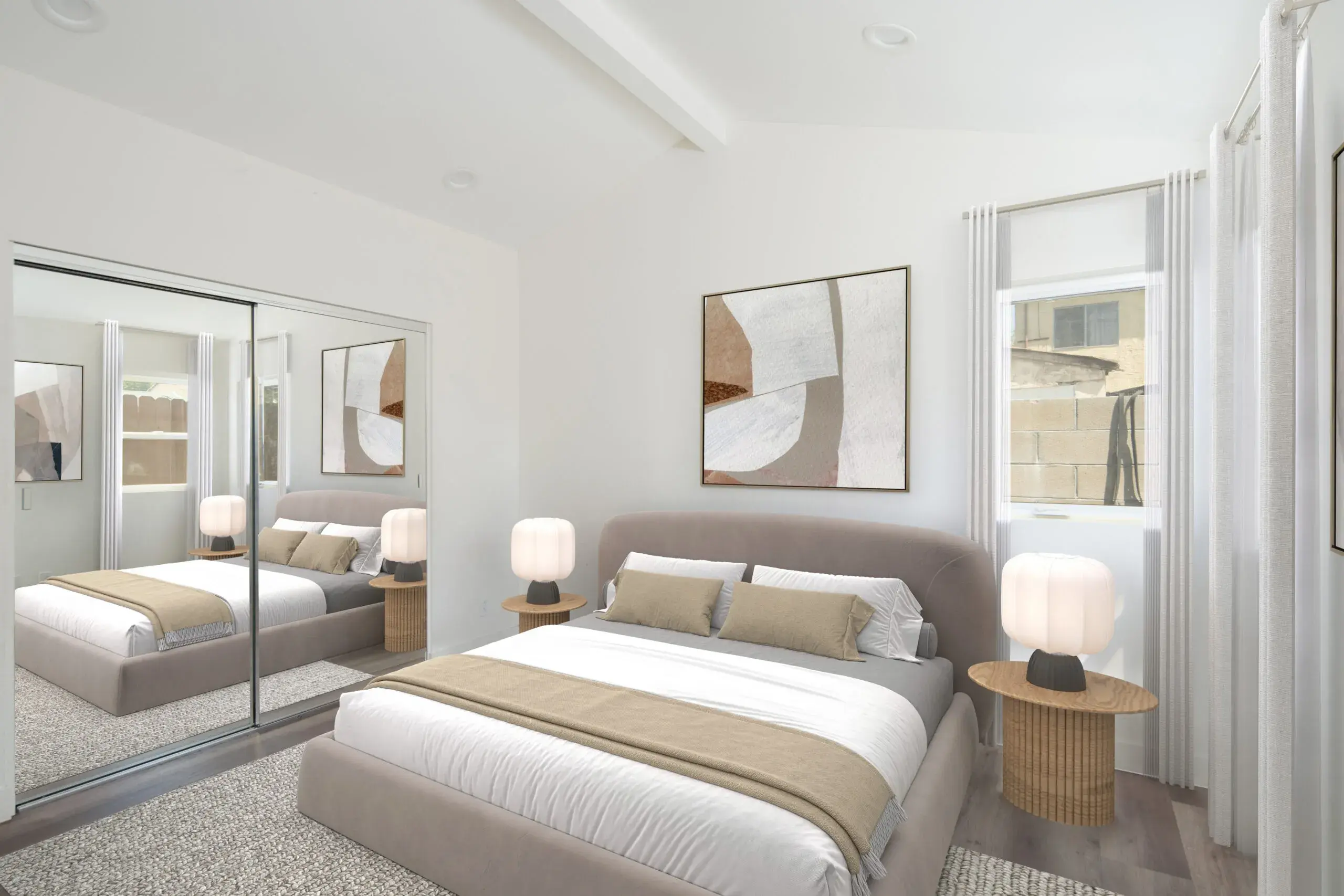
Additional Requirements in San Marino
Per Title 24 of the California Energy Code, solar panels of appropriate size and capacity are mandatory on new-construction ADUs. ADUs built from converted existing structures are exempt, as may be ADUs located under significant shading. Smaller ADUs may be subject to reduced or modified solar panel requirements.
San Marino does require separate utility meters for ADUs.
An ADU does not necessarily get assigned its own address in San Marino, but a separate address may be assigned if determined to be necessary for public safety.
Low Impact Development (LID) is an approach to land development or redevelopment that seeks to preserve and conserve onsite water quality and natural features, with minimal detrimental effect to local waterways and ecosystems. The City of San Marino may require LID fees for larger ADUs.
California State Law requires that dwelling units can only be used as short-term rentals or Airbnbs for terms of 30 days or longer.
Per the Costa-Hawkins Act of 1995, San Marino does not impose rent control on dwellings constructed after February 1, 1995. This means most new-build ADUs are exempt. However, if the primary dwelling unit is subject to rent control, it might apply to the ADU as well.
While encouraging the use of electric appliances for efficiency and sustainability, San Marino does not prohibit gas appliances in new ADUs as long as all relevant installation and safety standards are met.
In San Marino you are only required to install sprinklers in a new ADU if the primary dwelling unit has them as well. You may also be required to install them if the ADU is located within a special fire hazard zone.
Have Additional Questions?
Visit our comprehensive FAQ page for more information.