
If you own property in Los Angeles, there’s a good chance you’ve wondered whether an ADU could work on your lot. Maybe you want rental income, more space for family, a private guest house, or a smarter long-term use for your backyard.
The hard part is that “Can I build an ADU?” isn't a yes-or-no question until someone looks at your property.
In this blog, we’ll explain how to evaluate if it's possible to build an ADU on your property in Los Angeles. You’ll learn what zoning, setbacks, utilities, garage conditions, and site constraints can tell you before you move into design or permitting.
Here’s what we’ll cover:
Start With Your Jurisdiction
Your ADU rules depend on where your property is located, not just on whether you say “Los Angeles.”
City of Los Angeles vs. Greater Los Angeles
That distinction matters because Greater Los Angeles includes the City of Los Angeles, unincorporated Los Angeles County, and independent cities like Burbank, Pasadena, Culver City, Santa Monica, Long Beach, Beverly Hills, and many others.
If your property is in the City of Los Angeles, your ADU will typically go through LADBS. If your property is in Burbank or Pasadena, you may be dealing with a different building department, a different submittal process, and different local review habits.
The general ADU laws may be similar, but the day-to-day permitting experience can be very different.
Before you make design decisions, confirm:
- The city or jurisdiction your property falls under
- Whether your lot is in a special overlay area
- Whether your property is hillside, coastal, or historic
- Which department will review your plans
- Whether additional agency clearances may be needed
This is one reason two properties just a few blocks apart can have very different ADU timelines.
For a deeper overview of statewide and local rules, read our Ultimate Guide to ADU Regulations.
Check Whether Your Property Allows Residential Use
Most ADU feasibility starts with zoning.
In simple terms, an ADU is usually possible on a property where residential use is allowed, but that doesn't mean every lot can support the same type, size, or layout. Your property may allow an ADU in theory while still having physical or regulatory constraints that affect what you can actually build.
What to Confirm During a Basic Zoning Review
- Is the property residentially zoned?
- Is there an existing legal primary dwelling?
- Is the lot single-family or multifamily?
- Is there enough space for a detached ADU?
- Would an attached ADU or Junior ADU be a better fit?
- Are there overlays or special conditions?
This is also where homeowners sometimes get discouraged too early. A small lot, older garage, or unusual backyard does not automatically mean an ADU is impossible.
Many homeowners assume their property won't qualify because of lot size, parking, or setback concerns. We cover several of those assumptions in our post on common ADU misconceptions.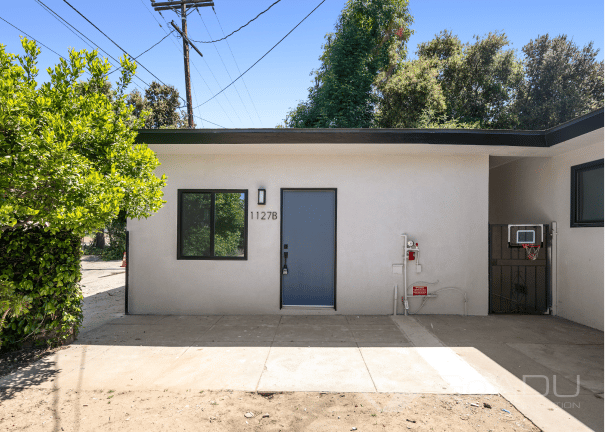
Look at Your Buildable Area
Your buildable area is the part of your property where an ADU could realistically fit.
This is where ADU feasibility becomes more practical. A property may be eligible on paper, but the final layout depends on setbacks, easements, access, existing structures, utility locations, trees, slope, and the relationship between the main house and the proposed ADU.
Site Factors That Shape Your ADU Layout
- Side and rear setbacks
- Distance from the main house
- Fire access
- Sewer connection options
- Electrical service and panel capacity
- Existing driveways and site access
- Lot slope and drainage
- Trees or protected landscaping
- Easements or utility conflicts
A flat backyard with clear access is usually simpler than a hillside lot with retaining walls, limited staging space, and utility conflicts.
That doesn't mean the second property is impossible. It just means the design, engineering, and permitting strategy need to be more carefully planned from the beginning.
Decide Which Type of ADU Fits Your Los Angeles Property
The right ADU type depends on your lot, your goals, your budget, and how you plan to use the space.
In Los Angeles, homeowners commonly consider detached ADUs, attached ADUs, garage conversion ADUs, and Junior ADUs. Each option solves a different problem, so the best choice is not always the one that looks easiest at first.
Detached ADU
A detached ADU is often the best fit when you have enough backyard space and want the most privacy between the main home and the new unit. This is common for rental income, multigenerational living, or a long-term property value strategy.
Attached ADU
An attached ADU can work when your property does not have enough room for a separate structure, or when connecting to the existing home makes more sense for layout, access, or budget.
Garage Conversion ADU
A garage conversion ADU can be a smart option when the existing garage is in the right location and the structure is worth converting. In some cases, a garage conversion ADU in Los Angeles can help you use existing square footage more efficiently than building from scratch.
Junior ADU
A Junior ADU, or JADU, is usually smaller and located within the existing home. It can be a good option when your lot cannot support a larger detached structure or when you want a more modest project.
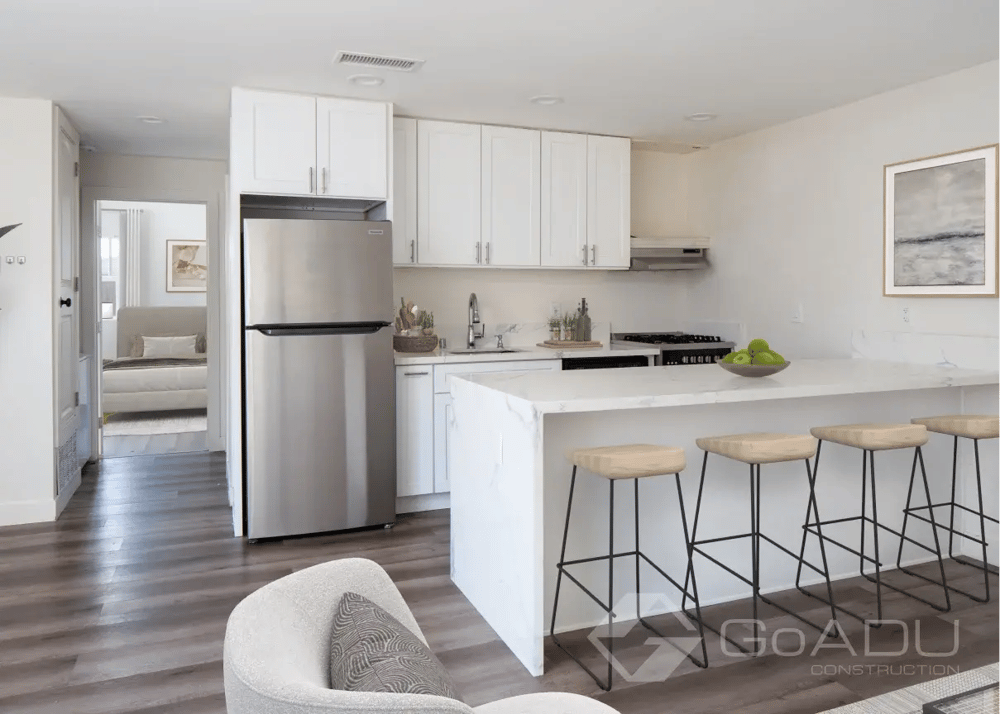
If you're trying to picture what different ADU types can look like on real properties, reviewing completed ADU projects across Los Angeles can help you compare layouts, sizes, and design possibilities before you settle on one direction.
The right answer isn't always obvious from the street. Sometimes the garage looks like the easy choice until you inspect the foundation, framing, utilities, and ceiling height. Other times, a detached ADU looks complicated at first but becomes a better long-term investment.
.webp?width=1000&height=646&name=8-2-rjnaw7m62xp3qt1cr47rmdp98vokjcl7afyjmiii94%20(1).webp)
Pay Attention to Garage Conversion Feasibility
A garage conversion ADU is not just a cosmetic remodel.
To convert a garage into a legal living space, the structure needs to support residential use. That means the foundation, framing, waterproofing, ceiling height, electrical, plumbing, insulation, and fire separation all need to be evaluated.
When a Garage May Be a Good ADU Candidate
A garage may be a strong ADU candidate if:
- It is legally permitted
- The structure is in good condition
- The location works for privacy and access
- Utilities can be brought in efficiently
- The slab and framing can meet residential requirements
- The layout can support a functional kitchen, bathroom, sleeping area, and living space
When a Garage Conversion May Be More Complicated
A garage may be less ideal if it has major structural problems, water intrusion, poor access, or a layout that makes the finished ADU feel cramped.
This is why an experienced ADU contractor should compare a garage conversion against other options before you commit. Sometimes conversion is the best path. Sometimes new construction gives you a better result.
Watch for Property Conditions That Can Slow Things Down
Some ADU challenges don’t show up until someone studies your property carefully.
Common ADU Feasibility Red Flags
- Hillside conditions
- Historic Preservation Overlay Zones
- Coastal review areas
- Narrow lots or limited construction access
- Utility poles or overhead power lines
- Sewer grade issues
- Easements
- Unpermitted additions
- Protected trees
- Drainage problems
- Fire access requirements
- Existing code violations
The important thing is to identify these issues before plans are drawn.
A common mistake is paying for a design that looks good on paper but doesn’t match the realities of the site. When that happens, the project can get stuck in corrections, redesign, utility review, or budget surprises.
Good ADU planning starts with the property, not the floor plan.
Use This ADU Feasibility Checklist
Before you hire an ADU builder in Los Angeles, use this checklist to understand where your property stands.
Your property may be a good ADU candidate if:
- Your lot allows residential use
- There is an existing legal primary dwelling
- There is enough space for a detached, attached, garage conversion, or Junior ADU
- Setbacks and access appear workable
- Utilities can be connected without major surprises
- The site is not severely limited by slope, easements, or overlays
- Your goals match the type of ADU the property can realistically support
- You understand that permitting, design, engineering, and utility coordination all affect the timeline
Once your property looks like a possible fit, budget is usually the next question. Go ADU’s guide to ADU pricing in Los Angeles can help you understand how project type, size, site conditions, and finish level may influence the overall investment.
You don’t need to answer every question on your own. The goal is to know what needs to be reviewed before you spend money on plans.
How Go ADU Construction Helps You Find Out What’s Possible in Los Angeles
A good ADU feasibility process should give you clarity before you make a major commitment.
At Go ADU Construction, we specialize exclusively in ADU construction in Los Angeles. Our process is built around helping homeowners understand what can be designed, permitted, and built on their property.
Start With a Site Evaluation
The first step is a free consultation and site evaluation. During that process, we look at your property goals, setbacks, zoning, utility conditions, and project type options. From there, we can help you understand whether a detached ADU, attached ADU, garage conversion ADU, or JADU makes the most sense.
Move Forward With a Clear ADU Plan
If the project moves forward, our ADU design-build process can include architectural design, engineering, Title 24 compliance, permit filing, construction, inspections, and final handoff.
The point is simple: you shouldn't have to guess whether your property can support an ADU. You should have a clear path before design begins.
FAQs About Building an ADU on Your Los Angeles Property
How do I know if I can build an ADU on my property in Los Angeles?
You know by checking your jurisdiction, zoning, lot conditions, setbacks, utilities, and ADU type options. A professional ADU site evaluation is the most reliable way to confirm what is possible before you start with a design.
What zoning allows ADUs in Los Angeles?
ADUs are generally allowed on many properties where residential use is permitted, but your exact options depend on your property type, local jurisdiction, and site conditions. Always confirm your zoning before making design or budget decisions.
Can I convert my garage into an ADU in Los Angeles?
Yes, many Los Angeles garages can be converted into ADUs, but your garage needs to be evaluated first. Foundation condition, framing, waterproofing, ceiling height, access, utilities, and code compliance all matter.
Do I need parking for an ADU in Los Angeles?
Not always. In the City of Los Angeles, ADUs created within an existing home or existing accessory structure usually do not require an added parking space. New detached ADUs may require parking, but many properties qualify for exemptions, including ADUs located within a half-mile walk of public transit. If covered parking is removed to build an ADU, the city does not require that parking to be replaced. The safest way to know is to review parking during a property-specific ADU feasibility check.
What can stop me from building an ADU?
Common ADU blockers include severe site constraints, unsafe structures, utility conflicts, easements, hillside issues, protected trees, coastal or historic review, and unpermitted work. Many challenges can be solved, but they need to be identified early.
Find Out If You Can Build an ADU on Your LA Property
The best way to know whether you can build an ADU on your Los Angeles property is to start with feasibility, not design.
Your zoning, lot layout, utilities, setbacks, garage condition, and local jurisdiction all affect what’s possible. A quick online search can give you general information, but it cannot show how those rules and site conditions will apply to your specific property once design, permitting, and construction begin.
Go ADU Construction helps Los Angeles homeowners evaluate their properties, compare ADU options, and move forward with a clear plan. If you’re thinking about building an ADU, the smartest next step is to schedule a consultation with a team that can help you understand what’s realistic before you spend money on plans.