
If you’ve spent any time researching ADU costs in Los Angeles, you’ve probably run into a range from $150,000 to $500,000 or more. And if you’re like most homeowners we talk to, that range doesn’t actually help you plan anything.
So let’s fix that.
In this guide, we’re breaking down what ADUs cost in Los Angeles in 2026 based on real projects we’ve completed, not national averages or ballpark guesses. We’ll cover:
- What Does an ADU Cost in Los Angeles? (Quick Reference)
- How Much Does a Garage Conversion ADU Cost in Los Angeles?
- How Much Does a Detached ADU Cost in Los Angeles?
- How Much Does an Attached ADU Cost in Los Angeles?
- How Much Does a Junior ADU (JADU) Cost in Los Angeles?
- How Much More Does a Custom ADU Cost?
- Are ADUs Worth It in Los Angeles?
- What Will Your ADU Cost?
- Frequently Asked Questions
What Does an ADU Cost in Los Angeles? (Quick Reference by ADU type)
Here’s a high-level snapshot of ADU costs in Los Angeles today based on recent Go ADU projects. We’ll go deeper on each one below.
| Project | Type | Size | Cost Per Sq Ft | Total Cost | Use |
|---|---|---|---|---|---|
| Santa Clarita studio | Garage conversion | 362 sq ft | ~$362/sq ft | ~$131,000 | Short-term rental (Airbnb) |
| North Hollywood 1-bed | Detached ADU | 611 sq ft | ~$373/sq ft | ~$228,000 | Long-term rental |
| West LA 2-bed | Garage conversion | 675 sq ft | ~$420/sq ft | ~$284,000 | Primary residence |
| Monterey Park 3-bed | Detached ADU | 1,200 sq ft | ~$385/sq ft | ~$462,000 | Multigenerational living |
| Miracle Mile custom studio | Garage conversion | Studio | ~$533/sq ft | Varies | Custom / luxury |
At Go ADU, most of our projects fall between $350 and $500+ per square foot. Sometimes a little lower on larger builds. Sometimes higher when clients want custom design elements or premium finishes.
Gil walks through the real numbers behind ADU construction costs in Los Angeles including what most builders leave out of their early estimates.
How Much Does a Garage Conversion ADU Cost in Los Angeles?
A garage conversion ADU in Los Angeles typically costs between $150,000 and $350,000, depending on the size of the existing garage, its condition, the level of interior finishes, and the upgrades needed to meet current building codes. While garage conversions are often more affordable than building a new detached ADU because they reuse an existing structure, costs can still vary significantly if the project requires foundation repairs, utility upgrades, structural modifications, or extensive site work. The best way to determine an accurate budget is through a site evaluation that considers your property's specific conditions and your goals for the space.
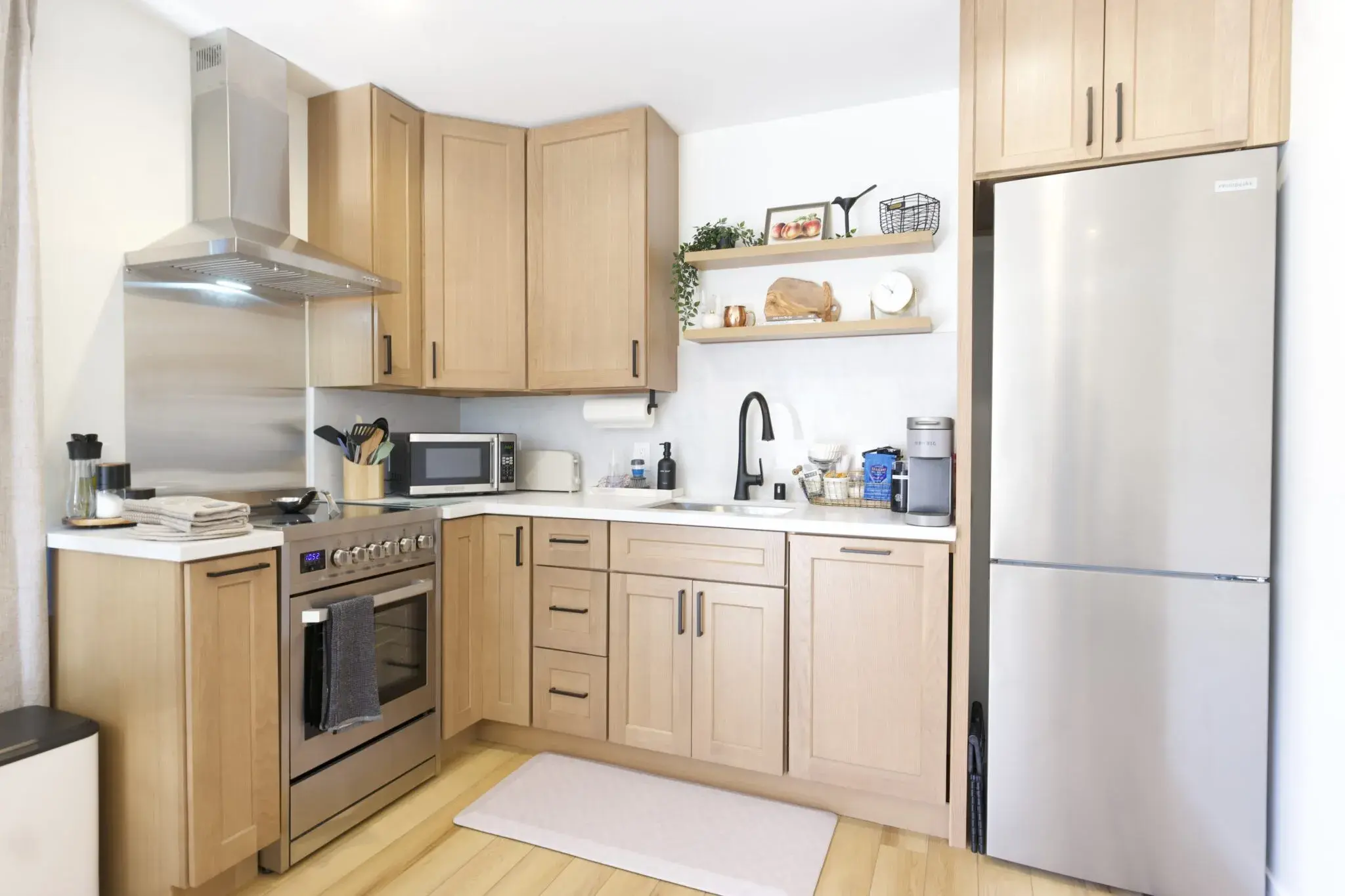
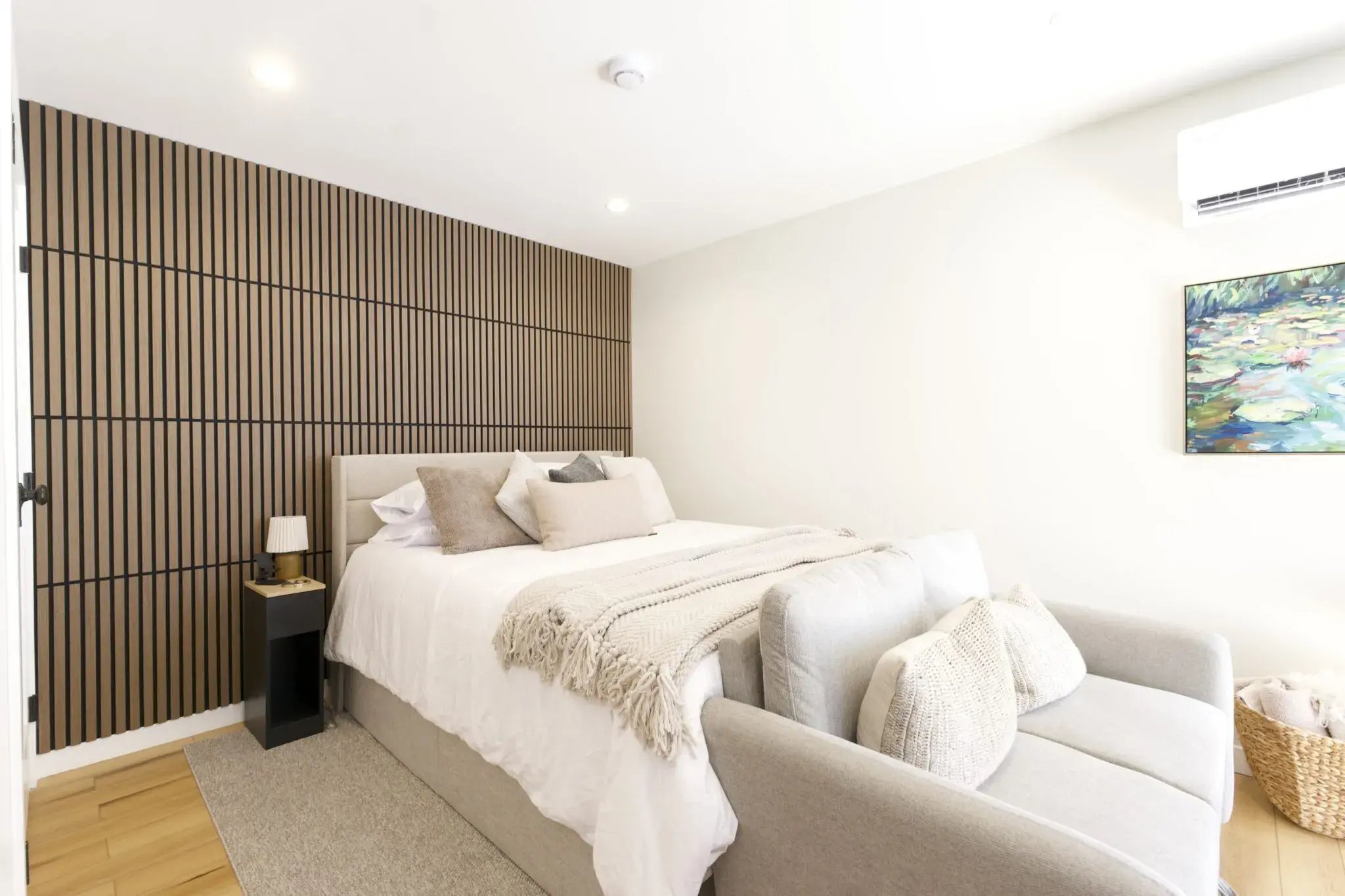
Example: Studio Garage Conversion in Santa Clarita
| Detail | Info |
|---|---|
| Size | 362 square feet |
| Type | Studio garage conversion |
| Intended use | Short-term rental (Airbnb) |
| Cost per square foot | ~$362/sq ft |
| Total cost | ~$131,000 |
| Outcome | Cash-flow positive within the first month |
The Santa Clarita homeowners share what the process was like, and how the ADU performed as an Airbnb rental from day one.
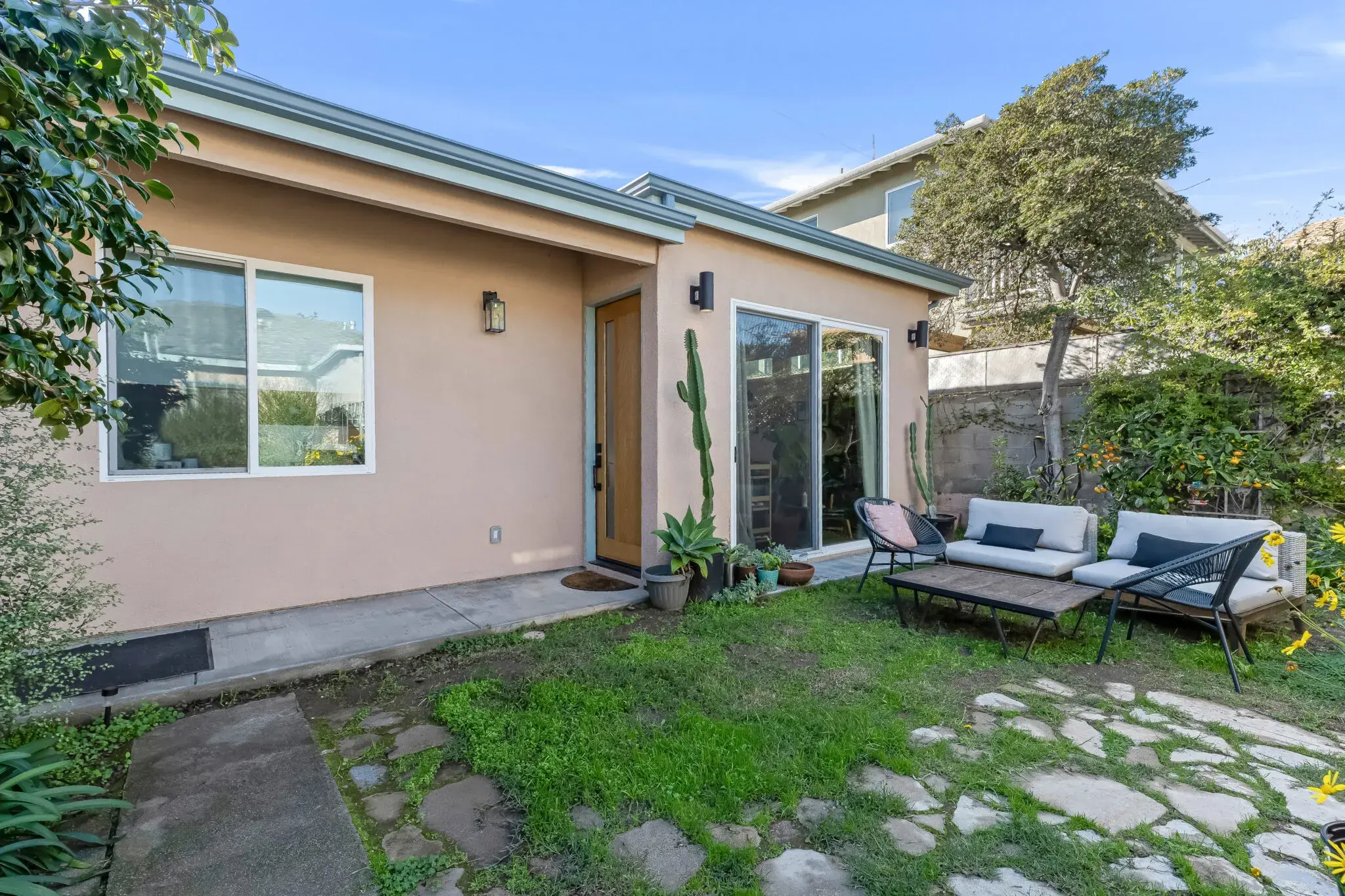
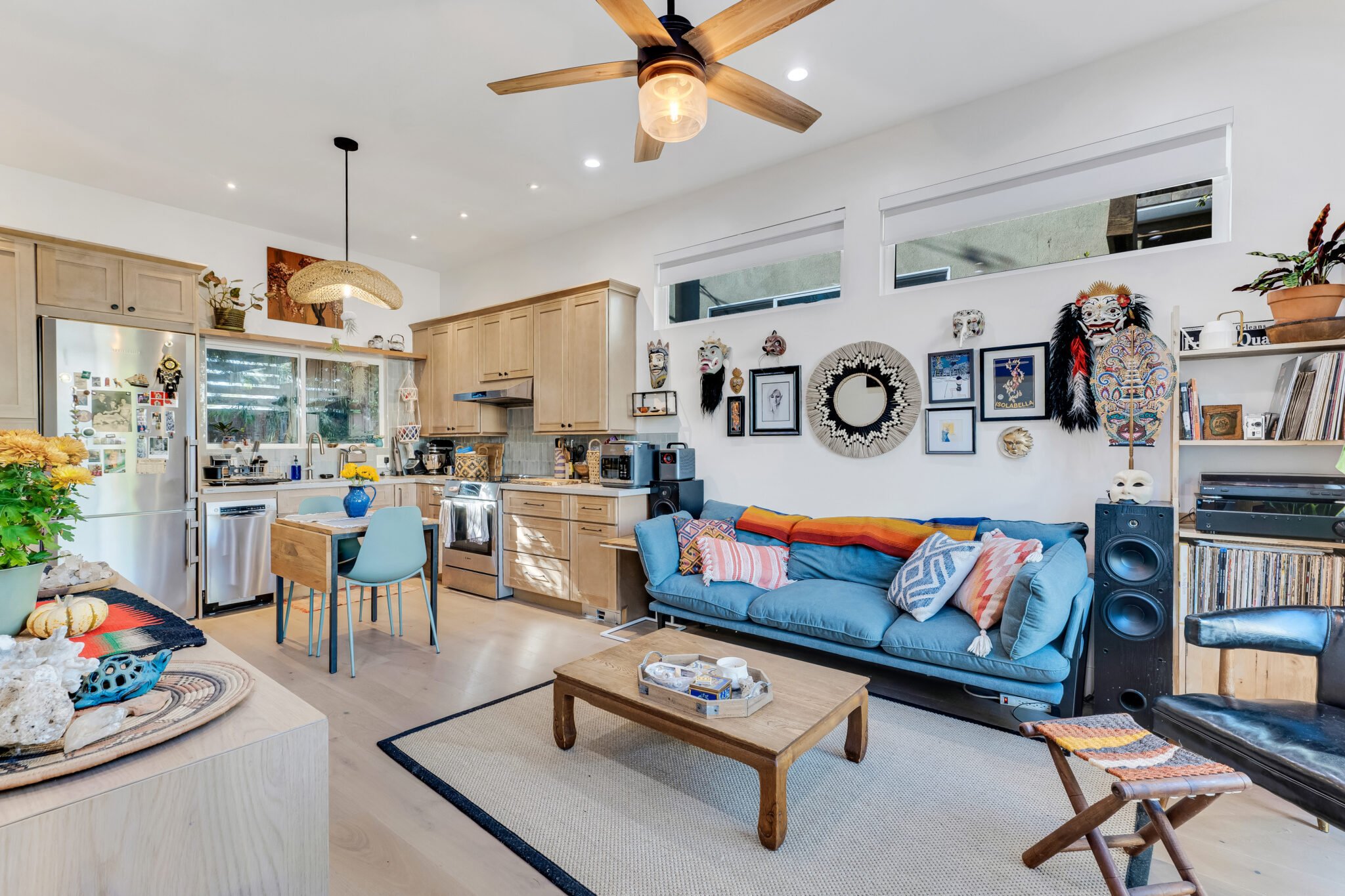
Example: Two-Bedroom Garage Conversion in West Los Angeles
This West Los Angeles garage conversion demonstrates that ADUs are about more than rental income. For this homeowner, it created an opportunity to build a beautiful primary residence in a neighborhood that would have otherwise been out of reach.
| Detail | Info |
|---|---|
| Size | 675 square feet |
| Type | Garage conversion |
| Configuration | 2 bedrooms, 12-foot ceilings |
| Cost per square foot | ~$420/sq ft |
| Total cost | ~$284,000 |
| Intended use | Primary residence |
| Outcome | A premium home in West LA at a price impossible to match on the open market |
Hear from the homeowner herself and why she chose to build rather than buy, what the process was like, and what it means to have a home of her own in Los Angeles.
How Much Does a Detached ADU Cost in Los Angeles?
A detached ADU in Los Angeles typically costs between $200,000 and $500,000 or more, depending on the size of the home, the level of customization, site conditions, and finish selections. Because a detached ADU is built as a new standalone structure, it generally requires new foundations, utility connections, and full construction from the ground up, making it the most expensive ADU option. While the investment is higher, detached ADUs also provide the greatest flexibility, privacy, and long-term value for homeowners looking to create rental income, house family members, or add a separate living space to their property.
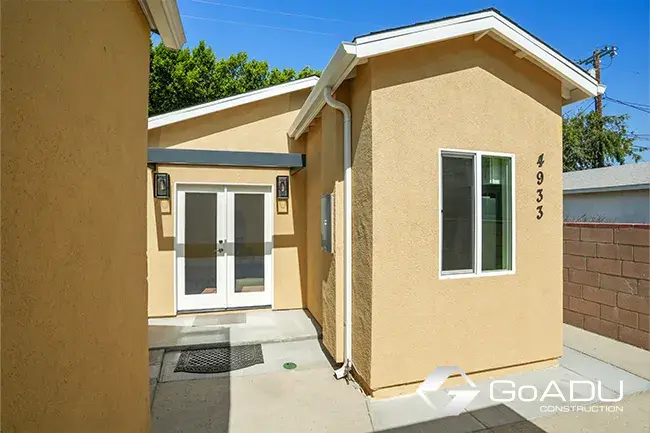
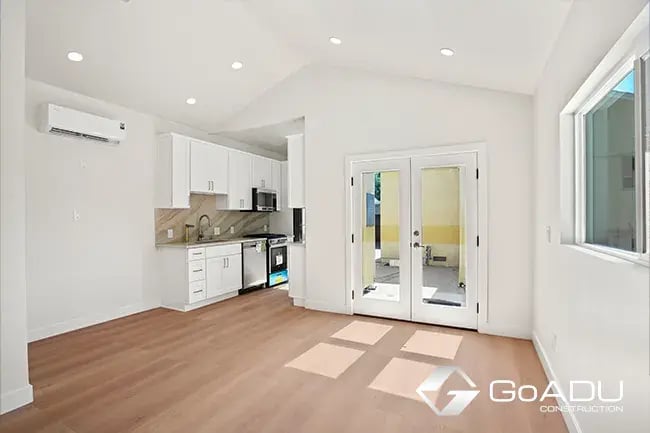
Example: One-Bedroom Detached ADU in North Hollywood
This 611-square-foot detached ADU shows how new construction can create a flexible, highly marketable living space. Designed for long-term rental or family use, the unit was built for about $228,000 and secured a tenant within five days of being listed.
| Detail | Info |
|---|---|
| Size | 611 square feet |
| Type | Detached ADU (new construction) |
| Intended use | Long-term rental or family use |
| Cost per square foot | ~$373/sq ft |
| Total cost | ~$228,000 |
| Outcome | Tenant secured within five days of listing |
A walkthrough of the finished North Hollywood one-bedroom ADU built for long-term rental, and rented within five days of listing.
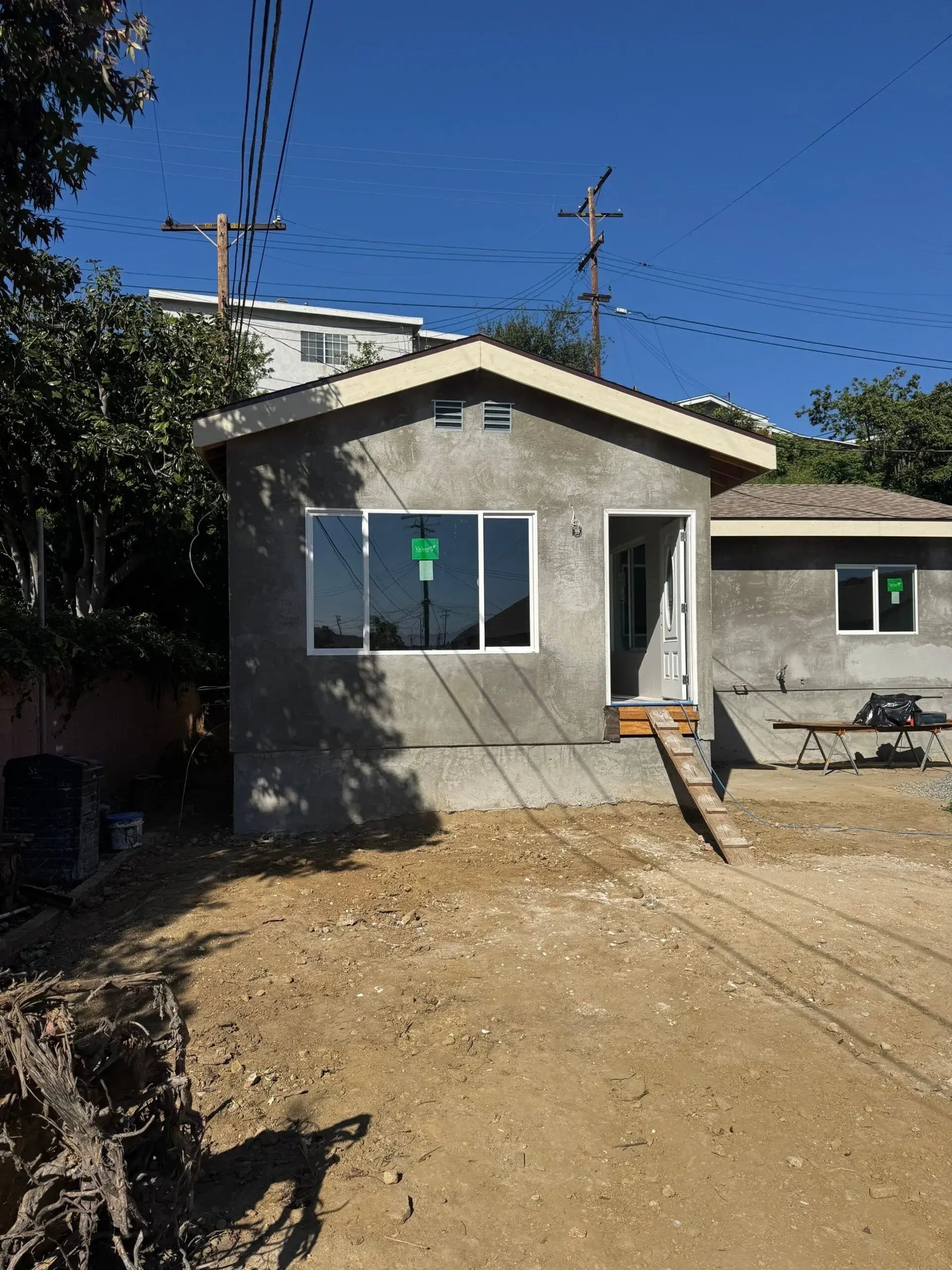
Example: Three-Bedroom Detached ADU in Monterey Park
This detached ADU was designed to give an aging parent the independence of her own home while keeping her close to family. At 1,200 square feet with three bedrooms and two bathrooms, it demonstrates how an ADU can be a practical solution for multigenerational living.
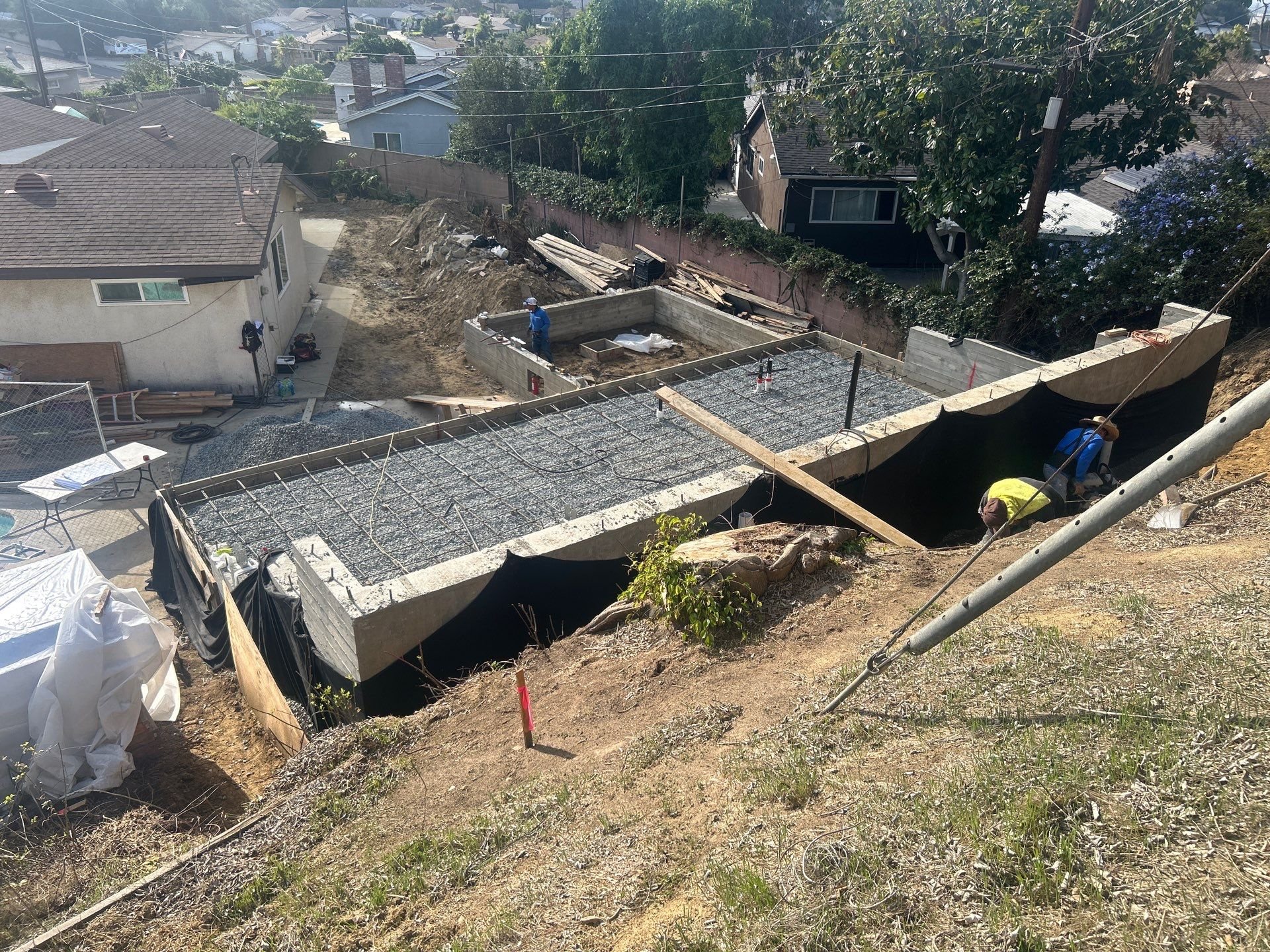
| Detail | Info |
|---|---|
| Size | 1,200 square feet |
| Type | Detached ADU, split-level foundation |
| Configuration | 3 bedrooms, 2 bathrooms |
| Cost per square foot | ~$385/sq ft (projected) |
| Intended use | Multigenerational living — primary residence for client’s mother |
| Note | Larger, more complex build — yet lower cost per sq ft than our Miracle Mile project |
How Much Does an Attached ADU Cost in Los Angeles?
An attached ADU in Los Angeles typically costs between $175,000 and $400,000, depending on the size of the addition, the complexity of tying into the existing home, and the level of interior finishes. Because attached ADUs share at least one wall with the main house, they can sometimes reduce costs by utilizing existing utilities and infrastructure. However, they also require careful planning to integrate with the existing structure, meet fire separation and building code requirements, and create a seamless transition between the old and new living spaces.
How Much Does a Junior ADU (JADU) Cost in Los Angeles?
A Junior ADU (JADU) in Los Angeles typically costs between $80,000 and $150,000, making it one of the most affordable ways to add living space to your property. Unlike a detached ADU, a JADU is created within the existing footprint of a single-family home and is limited to 500 square feet. Because much of the existing structure is reused, construction costs are generally lower. However, the final investment still depends on the home's layout, utility connections, code requirements, and the level of finishes you choose.
While JADUs aren't the right fit for every property, they can be an excellent solution for aging parents, adult children, caregivers, or homeowners looking to maximize the functionality of their existing home without building a separate structure.
How Much More Does a Custom ADU Cost?
Not every ADU is a standard box. Some homeowners want something that reflects the character of their property, their neighborhood, or their personal vision and that investment often pays off in rental appeal, property value, and long-term satisfaction.
Example: Custom Studio Conversion in Miracle Mile
This custom garage conversion demonstrates how thoughtful design can transform a simple structure into a high-end living space. With architectural details that complement the original 1920s Spanish home, the finished ADU feels more like a boutique apartment than a converted garage.
.webp?width=650&height=420&name=8-2-rjnaw7m62xp3qt1cr47rmdp98vokjcl7afyjmiii94%20(1).webp)
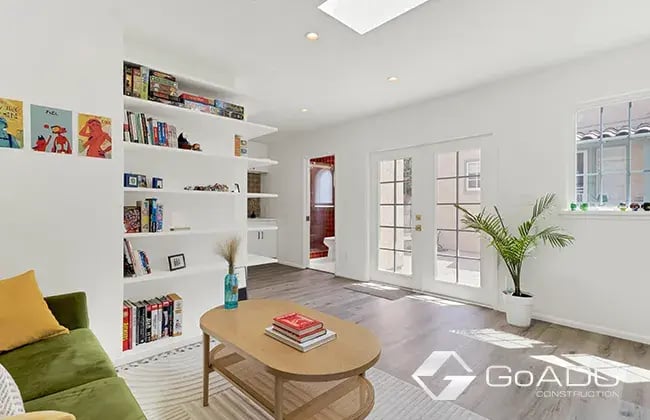
| Detail | Info |
|---|---|
| Size | Studio |
| Type | Garage conversion with custom design |
| Special features | Office/flex space, 1920s Spanish architectural detailing |
| Cost per square foot | ~$533/sq ft |
| Outcome | Finished unit resembles a small luxury apartment |
Our clients in Miracle Mile talk about what they wanted, what they got, and why the custom design investment was worth every penny.
Are ADUs Worth It in Los Angeles?
For many homeowners, the answer is yes. An ADU can be one of the most versatile investments a Los Angeles homeowner can make. It can generate rental income, provide housing for family, and add long-term value to your property.
A well-designed ADU can:
- Generate rental income to offset your mortgage or create passive income
- Create private living space for aging parents, adult children, or guests
- Provide an affordable housing option in an expensive real estate market
- Increase the value and functionality of your property
- Adapt to your family's changing needs over time
What Will Your ADU Cost?
The honest answer is: it depends. The size of your ADU, your property's existing conditions, the type of ADU you choose, and your design preferences all play a role in the final investment.
If you're still in the research phase, our Los Angeles ADU Cost Guide is a great place to start. It includes typical price ranges, project examples, and the biggest factors that influence cost so you can begin planning with confidence.
If you're ready to understand what an ADU could cost on your property, schedule a free consultation with our team. We'll evaluate your site, discuss your goals, and help you determine the best path forward with a realistic budget based on your project.
Frequently Asked Questions: ADU Costs in Los Angeles
What is the average cost to build an ADU in Los Angeles in 2026?
Most Go ADU projects fall between approximately $350 and $500+ per square foot, although larger ADUs may come in below that range while highly customized projects may exceed it. In total, most homeowners invest between $180,000 and $400,000+, including design, permits, engineering, utility connections, and construction. The final cost depends on the type of ADU, its size, site conditions, and the level of customization.
Can you build an ADU in Los Angeles for under $150,000?
It’s very difficult to do legally and professionally in today’s market. Even a modest garage conversion involves permit fees, utility upgrades, engineering, and construction labor that quickly push costs beyond that threshold. Be skeptical of any bid that seems dramatically below market as it usually means something has been left out.
Why do smaller ADUs cost more per square foot than larger ones?
Because many costs such as the kitchen, bathroom, plumbing, electrical, permits, and foundation are largely fixed costs regardless of how big the unit is. When you spread those fixed costs over more square footage, your per-square-foot number goes down. This is one reason going slightly larger can actually give you better value per dollar.
Is a garage conversion cheaper than building a new ADU?
Sometimes, but not always. While you’re not starting from scratch structurally, you are working with an existing structure that may have outdated electrical, no plumbing, inadequate insulation, and other deficiencies that need to be brought up to residential code. Retrofitting an existing space can be just as complex than building new. New construction tends to be more predictable because there are no hidden surprises once the walls open up.
Can an ADU be used as a primary residence?
Absolutely. It’s becoming an increasingly common solution for younger buyers who can’t afford to purchase a home in Los Angeles. Building an ADU on a family member’s property can be a practical path to homeownership in neighborhoods that would otherwise be out of reach.
What soft costs should I budget for beyond construction?
Plan for architectural design ($8,000–$20,000+), engineering ($3,000–$10,000), city permits and plan check fees ($5,000–$20,000), utility connections ($5,000–$20,000), and site work if your lot requires it. These can add $30,000–$80,000 or more to your total project cost.
How long does it take to build an ADU in Los Angeles?
Most projects run 8–14 months from initial design through final inspection, depending on the type of ADU, city review timelines, and construction complexity. The permitting phase alone can take several months in Los Angeles. This is one reason working with a builder who knows the LADBS process well makes a significant difference.
For a phase-by-phase breakdown, read our guide to how long an ADU takes to build in Los Angeles, including planning, permitting, construction, and final inspection.
Do ADUs increase property value in Los Angeles?
In most LA neighborhoods, yes. Particularly when the ADU is well-designed and professionally built. A quality ADU adds usable square footage, generates potential rental income, and broadens the appeal of your property to future buyers. The increase in appraised value varies by neighborhood and ADU type.
About Go ADU Construction
Go ADU Construction is a family-owned ADU builder based in Burbank, CA, serving the greater Los Angeles area since 2017. We specialize exclusively in ADU design, permitting, and construction and handle every stage of the process so you don’t have to. License No. #1076712.